Andoia Advisory
Discuss your matter

Notes on export control in aviation, aerospace and defence.

Short technical pieces on recurring export control questions in aviation, aerospace and defence. The focus is on classification, regulatory scope, US export controls, licensing, technical data and other issues that arise in practice.

The aim is to explain how the relevant frameworks work, where the difficult questions usually arise and what deserves closer attention.

US Export Control

Aviation writes the wildest stories

20 September 2026
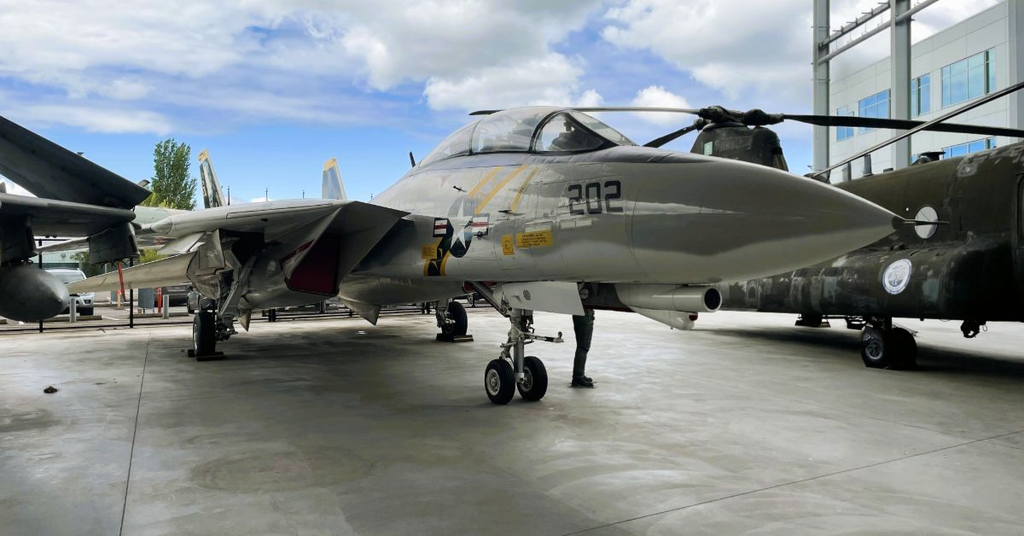
Aviation writes the wildest stories. The Maverick Act might be one of them.

A case that makes my aviation heart beat a little faster, and one that’s worth a closer look from a compliance angle.

In late April 2026, the US Senate passed the Maverick Act.
Three of the last F-14D Tomcats will go to the U.S. Space & Rocket Center for exhibition. One Tomcat is explicitly allowed to be restored to flying condition. After 20 years of F-14 disposal, that’s a small sensation, because one of the most iconic jets in history could soon take off again.

Some Context

After the F-14’s retirement in 2006, any sale and any transfer of parts was prohibited. Retired Tomcats at the boneyard were even shredded.
The reason was Iran’s F-14 fleet, of which 79 had been acquired under the Shah. Despite embargoes and export bans, Iran kept getting hold of spare parts. In March 2026, airstrikes destroyed the last operational Iranian Tomcats. The main protected interest behind the export controls is no longer there.

The takeaway

Export controls are not a dead end. Once the protected interest falls away, even a 20-year-old ban can be adjusted, if only for three aircraft and one „I feel the need, the need for speed“ moment.

Personally, I first noticed the F-14 Tomcat watching JAG, not Top Gun, which I only saw years later. That the act was still named after the movie character Maverick, I can understand. Tom Cruise simply carries more weight in Congress.

Uncategorized

Bye Bye German Navy P-3C Orion

20 Juli 2026

With the end of 2025, the German Navy’s P-3C Orion fleet reached the end of its flight operations. From 2026 onward, the P-8A Poseidon will take over.

But while flight operations may stop, the stories tied to an aircraft rarely do.

My own P-3C story started in export controls. Among other things, it meant propellers and engines to the UK, radios and avionics components to the US. Every shipment had to be fully compliant from an export control perspective. A lot of responsibility, but also a lot of variety.

How that time strengthened my expertise and experience

Because the P-3C was built in the US, many topics naturally fell under US export control requirements.

• Hands-on experience with ITAR and EAR items and transactions.
• Deep exposure to Technical Assistance Agreements, Foreign Military Sales cases, and Third-Party Transfers.

Beyond that, I had the opportunity to manage in-service modifications as a project lead and to support my friend and former colleague Jürgen Wilke in material management. There was hardly a day without export control topics for both goods and technology.

Together with Frank Kayser, we also set up a completely new system support contract to ensure industry support for flight operations through the end of 2025.

Many thanks to Jürgen Wilke and Christian Maiershofer for their support and for sharing their experiences.

Everyone has their own story and memories, whether on the hangar floor or in the office.

US Export Control

Approval from Washington

27 Mai 2026

A shipment from one German company to another German company. It still needed approval from Washington.

Sounds odd. It is not.

A client builds a US chip into its own product. Under ITAR, that chip counts as a defence article. The US supplier holds the export licence, and that licence names who may receive the chip. The test lab they wanted to use is not on it.

Security screening done. Training on Controlled Unclassified Information (CUI) done. Neither of them replaces an ITAR authorisation.

ITAR follows the chip, no matter how deep it sits in your product. A new recipient means a retransfer request to the US Department of State before anything moves.
Fortunately, the client asked before shipping, so there is nothing to repair. The unit will go to the lab once the approval is in place.

Cases like this rarely end up on LinkedIn because nothing goes wrong. In my view, good compliance works exactly like that, quietly and without any drama.

Prefer your export compliance uneventful? Let’s talk.